What the global defense-tech shift means for Taiwan's technology ecosystem
From media and startups to defense technology
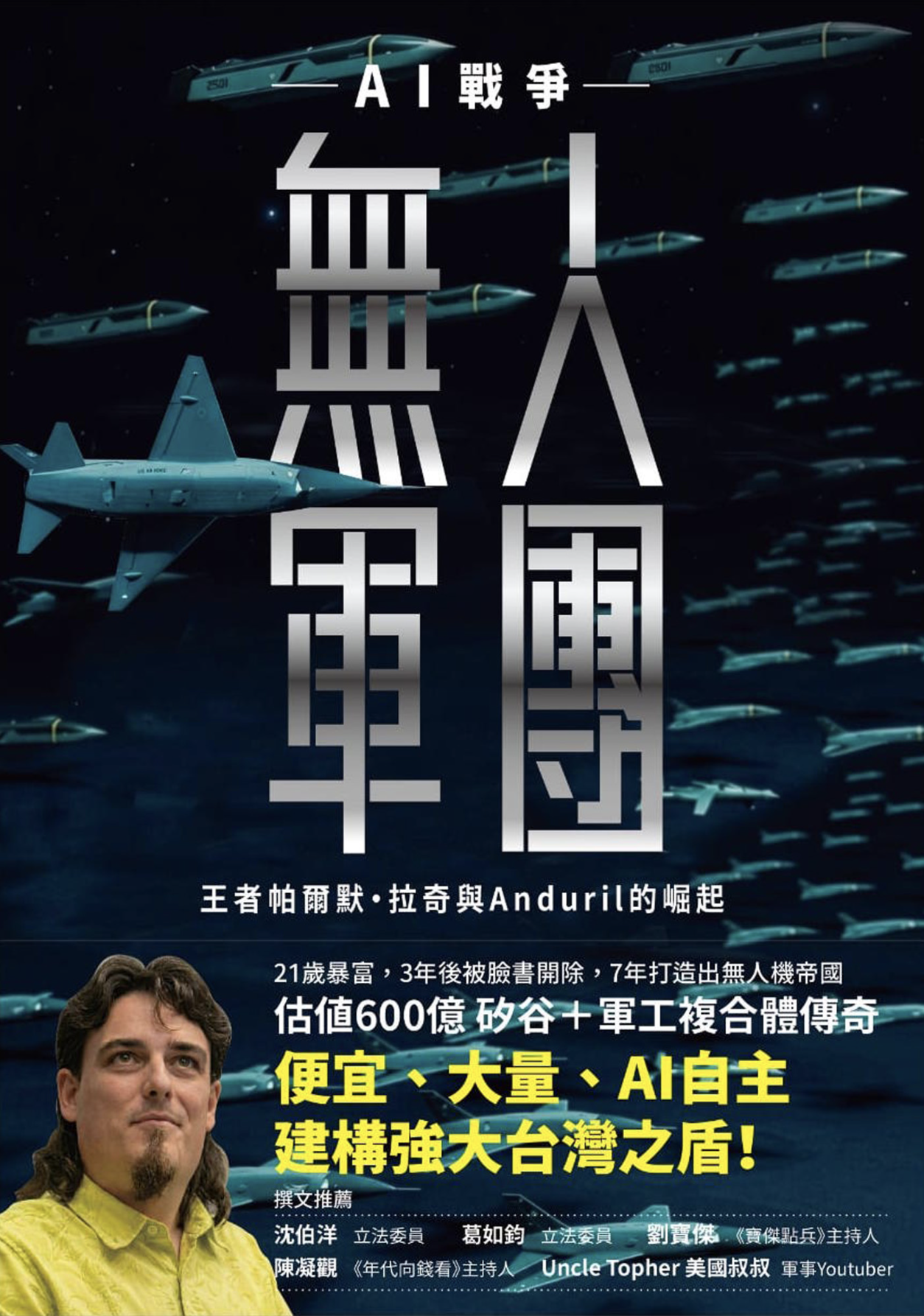
Founder of INSIDE, one of Taiwan's leading technology media brands. Co-founded Polydice, the company behind iCook, Taiwan's largest recipe platform. Host of the SideChat podcast. Since 2025, the person behind anduril.tw — and author of The Iron Legion, the first Traditional Chinese biography of Palmer Luckey and Anduril.
The first full-length biography of Palmer Luckey and Anduril in Traditional Chinese — 13 chapters, 100,000 characters
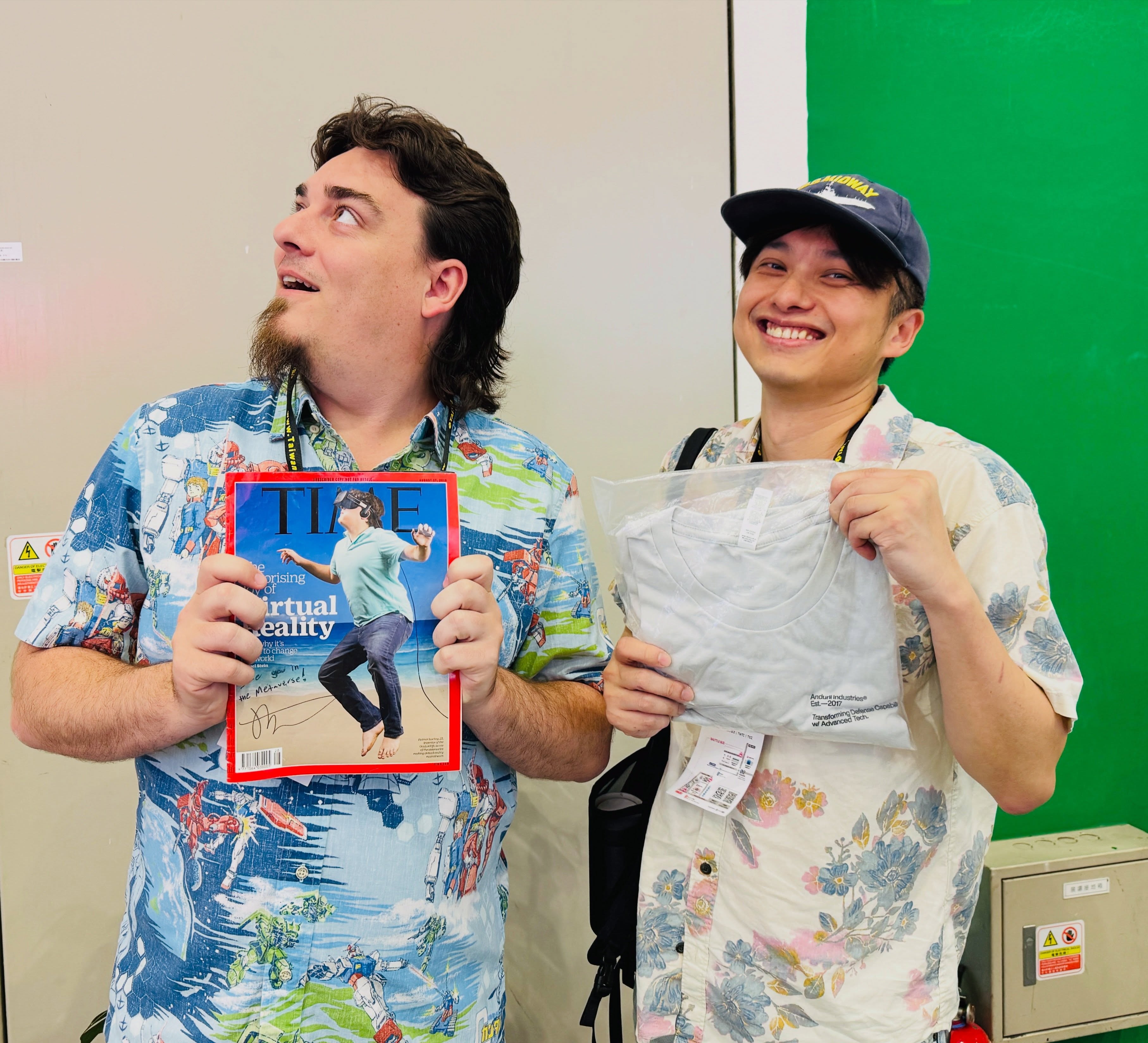
It started with a single line. Palmer Luckey talks about his company's mission as keeping a war over Taiwan from ever happening. I decided the Chinese-speaking world should know who this person is.
No founder of a private defense company had ever tied his company's fate to an island on the far side of the Pacific
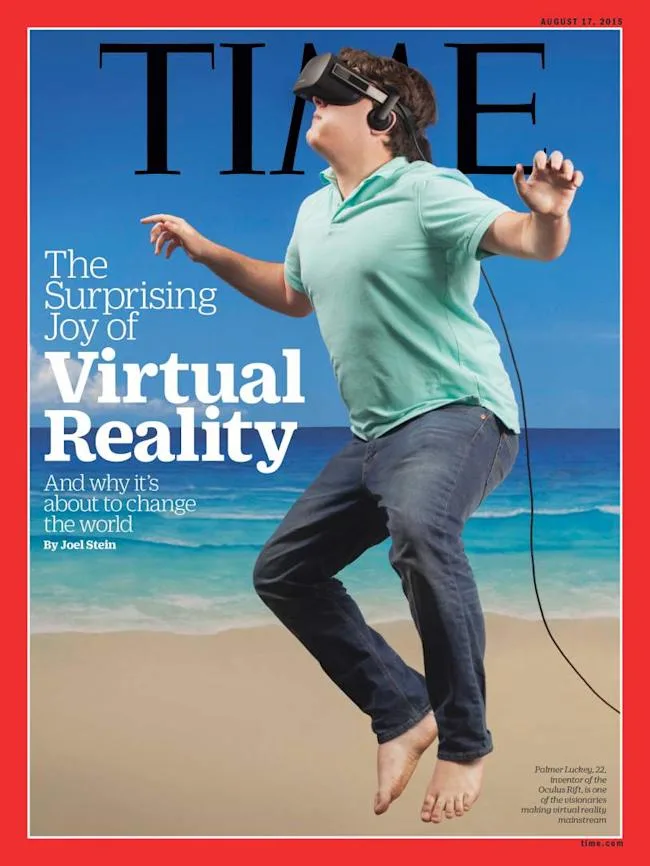
Self-taught electronics in a trailer in his parents' backyard. Collecting the world's VR headsets at fifteen. Kickstarting Oculus at nineteen. Selling to Facebook at twenty-one — and floating cross-legged on the cover of TIME a year later.
A donation of about $10,000 — Palmer says it was $9,000 — to a pro-Trump meme group, in a Valley that overwhelmingly backed the other side. The chain reaction, as he tells it: media siege, colleagues cutting ties, a forced apology, then termination without cause. Meta denies politics played any role — and Facebook publicly described his departure without ever disclosing he had been fired.
Oculus held everything he had — his friends, his reputation, technology he had been building since his early teens. All of it stayed with the company that pushed him out.
Trae Stephens of Founders Fund, Brian Schimpf of Palantir, Joe Chen of Oculus — plus Matt Grimm soon after. No recruiting process, no waiting for a term sheet. The company they founded is named after the reforged sword in The Lord of the Rings: Anduril, the Flame of the West. A broken blade, forged again.
I do not love the bright sword for its sharpness, nor the arrow for its swiftness … I love only that which they defend
Built like a Silicon Valley unicorn, priced like a fixed-price contractor
Defense product company, not defense contractor
Air, surface, undersea — everything runs on Lattice
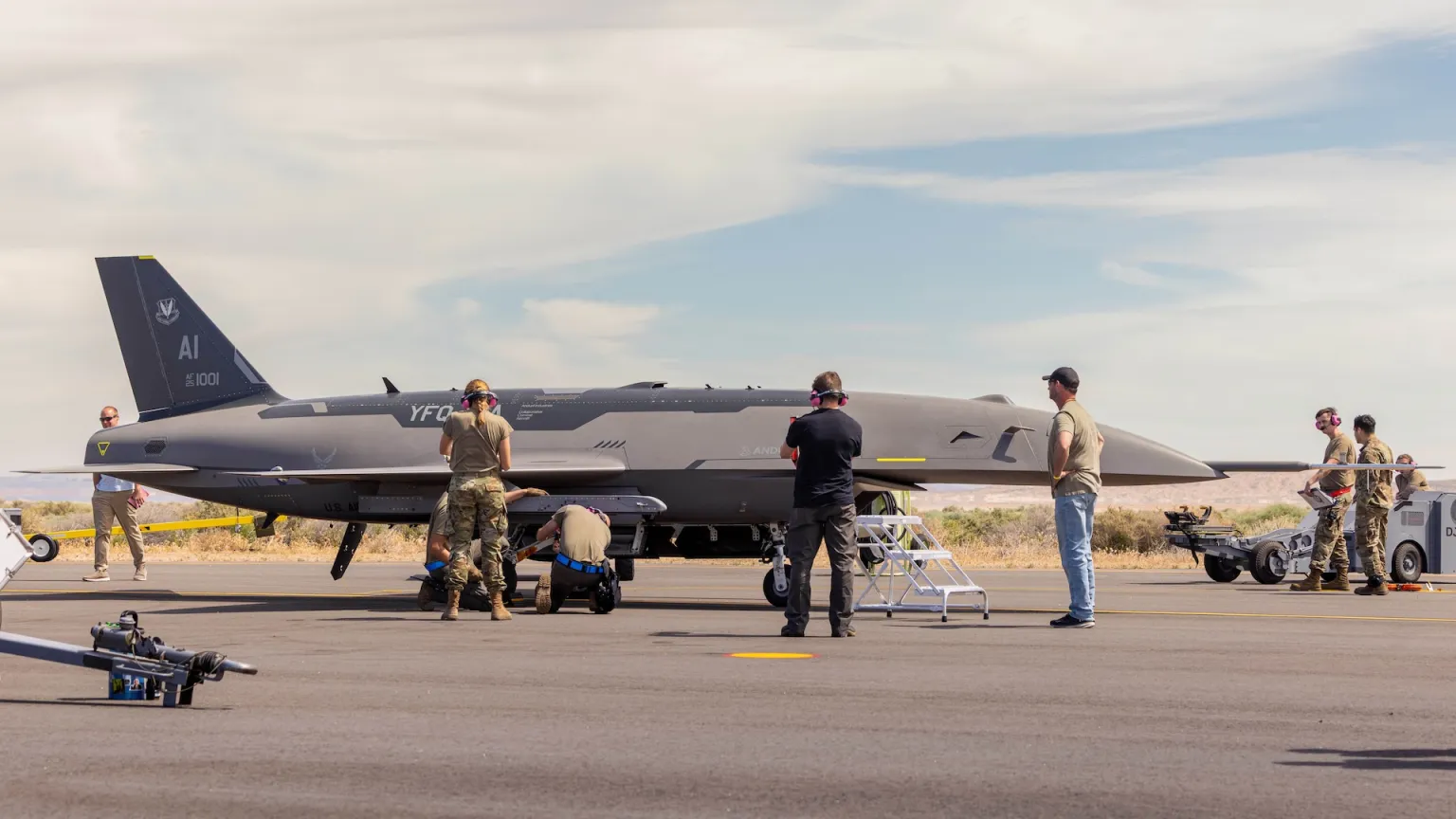
Anduril does not sell a weapon — it sells a software-plus-hardware ecosystem. The newest member shows the model: Archer builds Thunder's hybrid-electric tiltrotor airframe, Anduril adds the autonomy, and the same platform sells commercially as Halo for search-and-rescue and logistics.
Every drone, boat and sensor reports into the same operating system. Commanders see one battlefield; AI handles target tracking, threat evaluation and weapon pairing. Hardware can be copied. An OS plus years of battlefield telemetry and trained decision models cannot.
Modular design, commercial off-the-shelf parts, one factory building multiple weapon lines. Fury went from clean-sheet design to first flight in 556 days, and won one of the US Air Force's first two CCA production contracts about seven months later — a cycle the legacy primes quote in years, not months.
Ten ordinary tools, all of them already in any GM or Ford plant — that, Palmer argues, is the entire assembly kit
In 1993 the Pentagon's "Last Supper" dinner set off a consolidation that took 51 primes down to 5. Cost-plus contracts blunt every incentive to control costs — reinventing the wheel pays better than buying one. Thirty years on, Boeing has publicly sworn off signing new fixed-price development contracts.
Taiwan's next act is connecting silicon to software, data and autonomy
Taiwan already makes the sensors, the boards, the chips and the RF modules. The defense-tech shift turns those strengths into an entry ticket — and moves the value to whoever builds the autonomy layer on top.
Anduril's internal planning assumption is called "China 27" — every product assumes a Taiwan contingency by 2027. Three numbers explain why.
At the 2024 Shangri-La Dialogue, Indo-Pacific Command's Admiral Samuel Paparo told The Washington Post what the US plan for the Strait looks like. That sentence is the strategic starting point of the Replicator program.
I want to turn the Taiwan Strait into an unmanned hellscape using a number of classified capabilities … so that I can make their lives utterly miserable for a month, which buys me the time for the rest of everything
That is Palmer's assessment — his shortlist runs the US, Japan, South Korea, Germany, and Taiwan. The manufacturing base is already here: semiconductors, IC design, PCBs, camera modules, RF. What's missing is not capability. It's the decision to point that capability at defense.
Not only semiconductors for export but also semiconductors for defense. Not just sensors for your smartphones and for digital cameras, but missile seekers. Not just carbon-fiber bicycles, but carbon-fiber cruise missiles
Importing every weapon only compounds cost and dependence. A real shield grows out of four things — and each one is a market for founders.
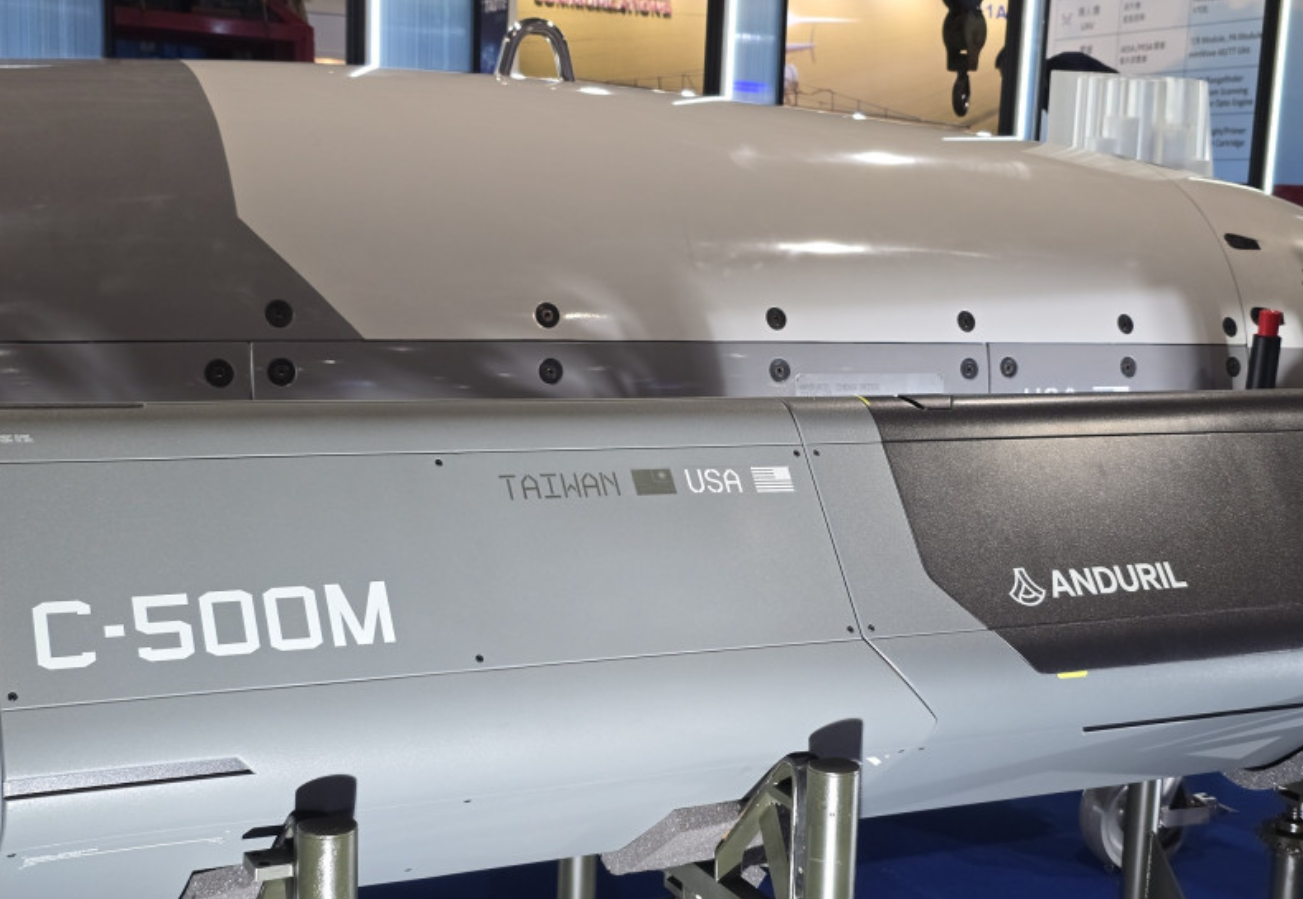
The new US defense stack — SpaceX, Anduril, Palantir — keeps expanding: Anduril's first self-built satellite reached orbit in July, with Lattice commanding it, and the Golden Dome program, estimated at $185B, pulls the stack into space. Taiwan is not watching from the sidelines. It is already plugging in.
Palmer Luckey's four-test rule — NTU lecture, August 2025. I was in the room
Peace is the goal — but peace built on fantasy doesn't hold. Where these four lines cross is where the next decade's companies get built.
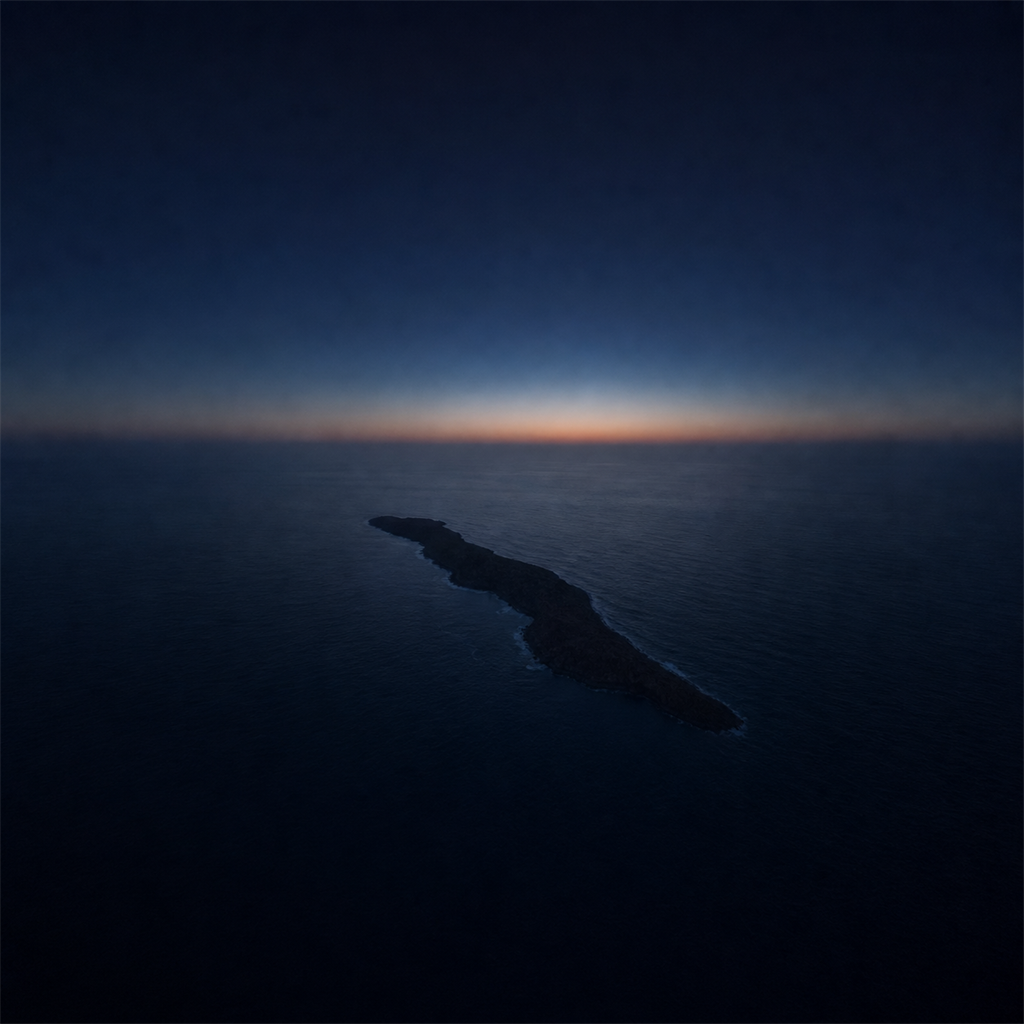
There's no secret arsenal of technology that's waiting to save any of us. Not in America and not here. There's nobody else. It's just you. It's just me. So, answer the call. Dare to build …
Questions, pushback, war stories — all welcome